
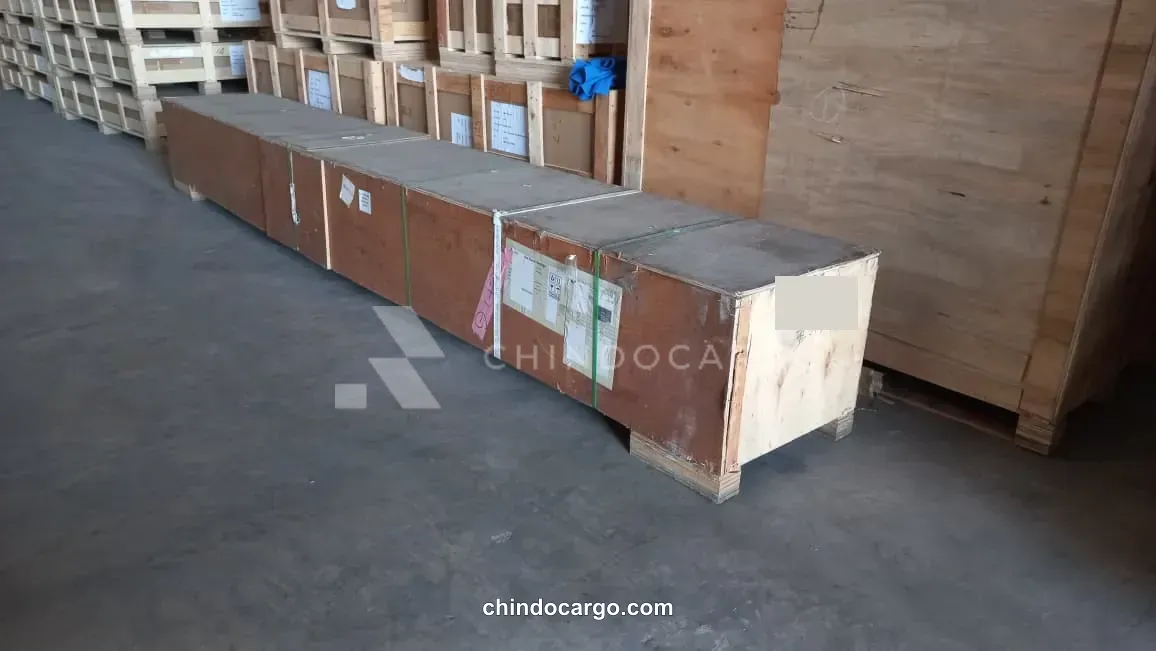
Sourcing furniture from China for a Bali villa starts with decisions about the building, its users and its operating budget. A supplier’s photograph can help communicate a style, but it cannot establish whether a sofa fits through the stairwell, a finish suits an exposed terrace, or replacement parts will be available later.
Before collecting quotations, connect the design brief with purchasing, import review and delivery planning. The useful comparison is the cost of an approved product arriving in usable condition at the intended location. A factory price alone cannot answer that question.
This guide explains how to prepare a purchase package for furniture, lighting and bathroom fixtures. Technical suitability and installation details should be confirmed by the project’s designer, contractor or qualified specialist.
1. Build a room-by-room product schedule
Give each item a stable reference. For example, use BED-01 for a bedroom bed frame and DIN-01 for the dining table. Repeat that reference on drawings, supplier quotations, sample approvals, inspection records and carton labels.
Record quantity, dimensions, materials, finish, intended location, assembly requirements and required-on-site date. Include an acceptable alternative only when someone has authority to approve it. A photograph showing a particular shape does not approve a different material or construction method.
Separate movable furniture from built-in pieces and installed fixtures. Built-in wardrobes depend on finished site measurements. A decorative light may require an installer to check its electrical specifications, mounting and access for maintenance. Bathroom fittings need compatible connections and installation clearances.
Assign one person to approve changes. Otherwise, a designer’s message about colour can accidentally become approval for a different model, quantity or price.
2. Decide what makes sense to source overseas
Compare the overseas option with an actual local alternative. Include replacement lead time, warranty handling, maintenance and installation support alongside the purchase price.
For rental accommodation, consider whether staff can clean and maintain the product, whether parts can be replaced independently, and whether a damaged item would disrupt a room’s availability. For custom furniture, confirm what happens if an item does not match the approved specification.
Outdoor placement needs a specific brief. Tell the supplier whether the item will face rain, sunlight, pool splash or coastal exposure. Ask for evidence relevant to the proposed material and use. Do not treat labels such as “outdoor” or “premium” as measurable acceptance criteria.
Some purchases may be better split: import selected furniture while buying items needing frequent replacement or local technical support nearby. Decide from the project’s circumstances rather than assuming one sourcing route is always cheaper.
3. Compare supplier quotations on the same basis
Send the same specification to every shortlisted supplier. Ask them to identify any deviation explicitly. A lower quote may use different upholstery, hardware, dimensions or packing.
| Quote field | What to confirm |
|---|---|
| Product | Item reference, drawing revision, material and finish |
| Quantity | Units, sets and components included |
| Price | Currency, unit price, tooling and other charges |
| Sample | Cost, approval process and production relationship |
| Readiness | Production estimate and when it starts |
| Packing | Cartons or crates, dimensions, weight and assembly state |
| Delivery term | Named handover point and allocation of responsibilities |
| Remedy | Process for defects, missing components and replacements |
Confirm who is selling, who is manufacturing and who receives payment. A trading company can be a suitable supplier, but its role should be clear. Unexplained changes to the contracting party or bank beneficiary require independent verification before payment.
4. Approve samples and production details in writing
Agree what the sample proves. A fabric swatch approves a fabric choice; it does not demonstrate the strength or dimensions of a finished chair. A showroom photograph does not prove that production will use the same components.
Keep a dated approval record with photographs, measurements and the final specification revision. Identify the approved reference sample where relevant. State which variations are acceptable and which require a new decision.
For repeat items, discuss consistency across the order. For mixed furniture, check that colours, heights and finishes work together. A matching colour name from two suppliers may describe different results.
Do not release custom production while essential site measurements remain unresolved. If the contractor changes a doorway or built-in opening, review the affected order before the supplier proceeds.
5. Define inspection before paying the balance
Specify who performs the inspection, when it occurs, what is checked and what report is required. Inspection, supplier coordination and freight are separate tasks unless the written offer combines them.
A checklist might cover item identity, quantity, dimensions, finish, visible damage, agreed functional checks, accessories and carton markings. Sampling does not establish that every unit was examined. State the inspection coverage and acceptance criteria in advance.
Agree how failures are handled: correction, reinspection, replacement, a documented concession or a paused shipment. Avoid leaving these decisions until goods are already packed for collection.
If using Alibaba Trade Assurance, review the applicable order terms and payment process. Do not assume an unrelated transfer or off-platform agreement receives the same protection. Retain the specifications and transaction evidence required by the chosen purchasing arrangement.
6. Review import requirements before committing funds
Create a technical description for each product category. Materials, function and specifications help the responsible importer or qualified adviser assess classification and applicable requirements.
Consult current official information through the Indonesia National Single Window and Directorate General of Customs and Excise. These references are starting points for checking the actual goods, rather than blanket approval for a mixed shipment.
Identify the importer, document responsibilities and required evidence before purchase. Supplier willingness to ship does not establish eligibility to import into Indonesia. Furniture, electrical items and bathroom fixtures should not be treated as one interchangeable product category.
7. Budget through arrival at the villa
Use a worksheet covering goods, samples, sourcing fees, agreed inspections, supplier delivery within China, export packing, freight, applicable import charges, storage, local transport, unloading and any assembly or installation.
Avoid counting the same charge twice. When a freight quote includes particular import charges, mark those as included and identify its endpoint. Warehouse arrival and delivery into a villa are different milestones.
Illustrative planning example: A project has beds, dining furniture and lighting from three suppliers. The beds finish first, while the lights need another approval. Compare the cost and timing of holding the beds for consolidation against a separate shipment. Include storage, handling, packing and the project’s actual need dates. This is a decision framework, not a customer case or freight quotation.
Ask for packed dimensions and weights. Product dimensions alone do not establish shipping volume, and additional protective packing can change the quotation.
8. Work backwards from installation dates
Track specification approval, samples, production, inspection, corrections, collection, consolidation, international movement, import processing and local delivery separately. Ask which stages are estimates and which depend on a completed approval or payment.
Survey the destination before dispatch. Confirm vehicle access, unloading space, lifting needs, stairs, doorway sizes, receiving hours and dry storage. A shipment reaching Bali does not establish that a truck can reach the property or that furniture can enter the building.
Prepare a receiving list using the original item references. Photograph packaging condition, reconcile quantities and record discrepancies promptly under the agreed claims process. Keep assembly instructions and spare components with the relevant items.
What to send a sourcing partner
Prepare the product schedule, reference images, technical drawings, quantities, target budget, project location and required dates. Identify your decision maker and unresolved specifications. Existing supplier links are useful, but a clear brief is more valuable than a long folder of unlabelled images.
ChindoCargo Sourcing works with Bali villa, hospitality and interior-project briefs. Sourcing tasks, fees, supplier purchasing, samples, inspections, freight and site delivery should be defined in the written proposal. Installation and inspection are included only when expressly agreed.
To discuss a project, send the official team your sourcing brief. Start with what you need, where it will be used and when it must be ready.